
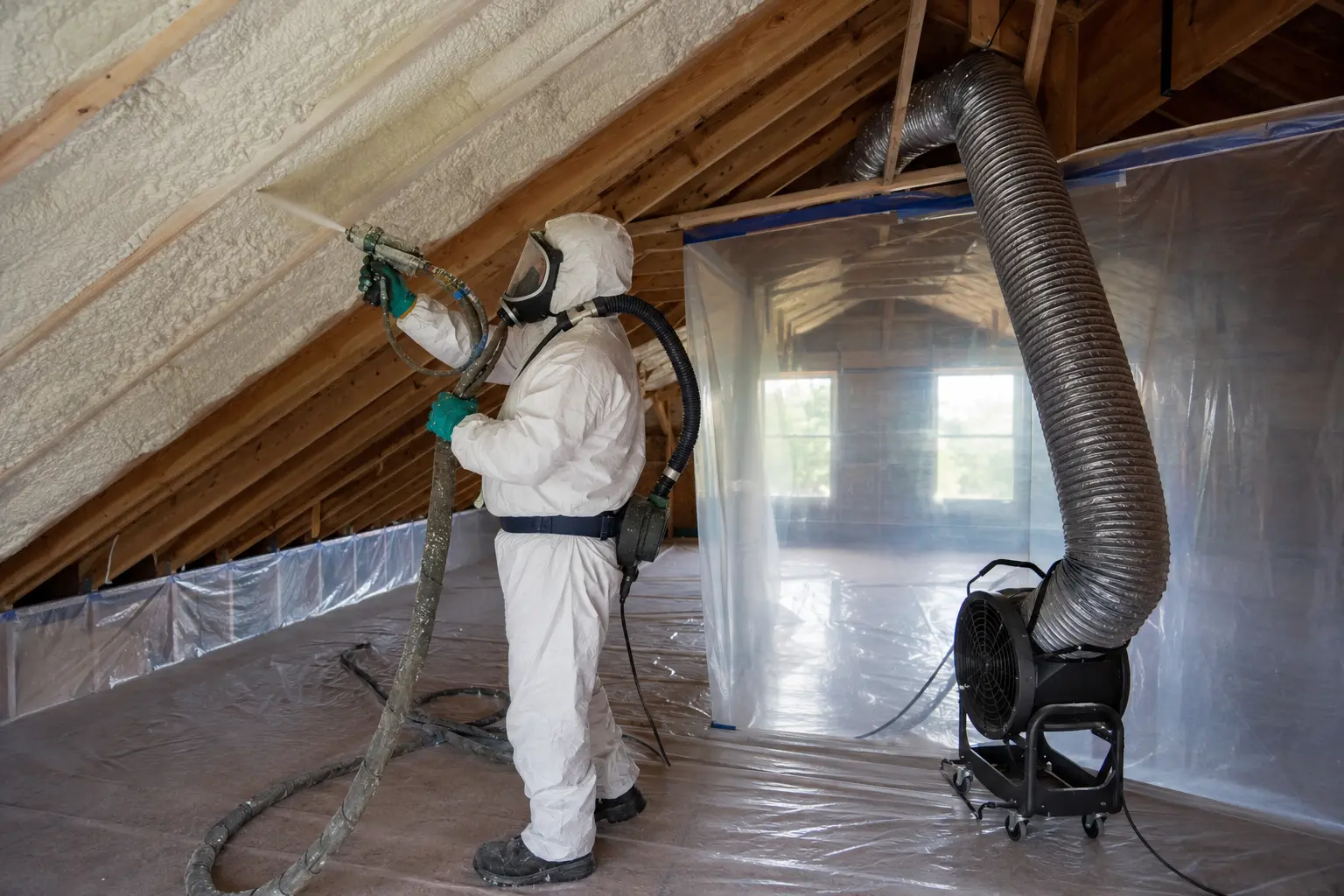
Why installation conditions matter
Two-component professional spray foam is produced by a chemical reaction at the jobsite. During application, trained workers use protective equipment, isolate the spray area and ventilate it to control exposure.
Occupants and unprotected workers should remain out until the product manufacturer’s re-entry and re-occupancy requirements are satisfied. Times vary by product and conditions; ask for the written instructions before work starts.
How improper work can create problems
Incorrect chemical ratio, poor substrate temperature, excessive pass thickness, inadequate mixing or unsuitable surfaces can lead to odor, poor adhesion or foam that does not cure as intended. Covering wet materials or active leaks can also conceal damage.
The right response is documentation, trained application, environmental checks and quality control—not a promise that every installation is automatically safe.
Moisture and roof concerns
Foam changes how heat, air and vapor move through an assembly. Roofline foam may change attic ventilation and drying. Closed-cell foam has lower vapor permeance at appropriate thicknesses, which can be useful but also makes pre-installation water management essential.
Repair roof and plumbing leaks first. Ask how the assembly will dry, how the roof deck remains inspectable and how termite requirements are handled.
Ventilation in a tighter home
Air sealing reduces uncontrolled outdoor air, which is usually a benefit, but a tighter enclosure may need designed fresh-air ventilation. Fuel-burning appliances require combustion-safety evaluation.
Ask whether blower-door testing, HVAC review or mechanical ventilation is appropriate for the project.